
JUVELOOK & LENISNA
Information and price list
WHAT IS JUVELOOK/LENISNA?
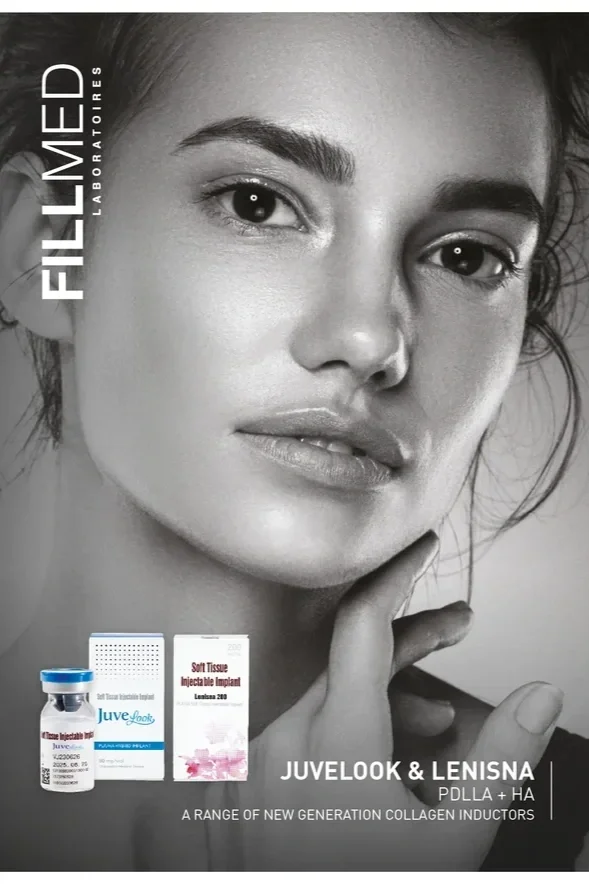
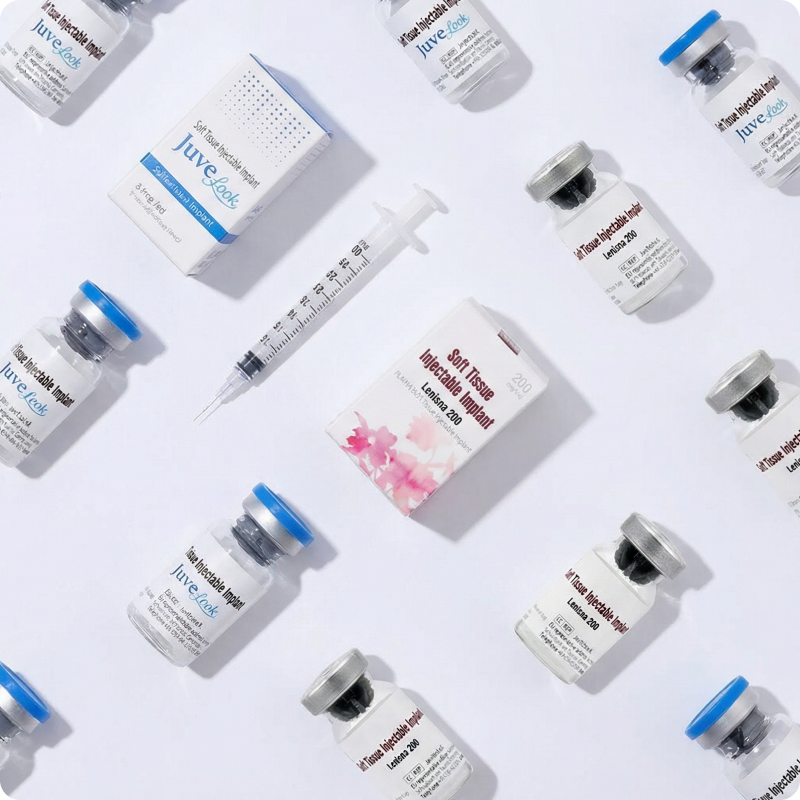
Juvelook and Lenisna are advanced injectable hybrid treatments that combine poly-D,L-lactic acid (PDLLA) with hyaluronic acid to trigger your body's natural collagen production.
Unlike traditional dermal fillers that just add immediate artificial volume, these treatments repair the skin's internal structure for gradual, natural rejuvenation. Both products are developed by Korean VAJIE Global / Lenisna/Juvelook manufacturers and function as next-generation skin booster.
Key Benefits:
No "Overfilled" Look: Because it works biologically via neocollagenesis, there is no risk of the puffy, frozen look sometimes associated with regular fillers.
Low Risk of Nodules: The round, uniform shape of the patented PDLLA molecules spreads evenly and eliminates the need for intense post-treatment facial massage.
Versatility: Aesthetic practitioners frequently combine both treatments—using Lenisna to lift the mid-face and jawline, while using Juvelook to refine delicate regions like the under-eye area
How They Work
Hyaluronic Acid (HA): Gives your skin instant hydration and an immediate healthy glow.
PDLLA Microspheres: Gradually break down under the skin while waking up cells called fibroblasts to make fresh collagen and elastin
juvelook: The Texture Specialist
Composition: Lower concentration of PDLLA with smaller particle sizes.
Best For: Delicate and thin skin, fine lines, large pores, acne scars, and dark circles under the eyes.
Results: Subtle, smooth skin texture lasting 12 to 18 months.
Lenisna: The Lifting Specialist
Composition: Higher concentration of PDLLA with larger particle sizes (also known as Juvelook Volume).
Best For: Deeper volume loss, skin sagging, jawline contouring, and wrinkles on the face, neck, or hands.
Results: Stronger structural support and firming lasting 18 to 24 months.
JUVELOOK pricelist
Single session (Face - 6ml) £650
Course of 2 (monthly treatments) £1100
Single session (Eyes/2ml) £250
Course of 3 (monthly treatments) £650
Lenisna pricelist:
Single session (10-16ml) £675
Course of 2 (6-8 weekly treatments) £1250
FAQs
-
Yes, Juvelook is exceptionally well-suited for the delicate area around the eyes. In fact, treating the periocular zone is one of its primary and most popular indications in aesthetic medicine.
Because the skin around the eyes is notoriously thin and sensitive, traditional thick dermal fillers carry a high risk of swelling, lumps, or an unnatural translucent blue tint (the Tyndall effect). Juvelook avoids these issues completely. [1]
Specific Eye Areas It Treats
Tear Troughs & Under-Eye Hollows: It softens deep shadows and hollows caused by thinning skin, thickening the dermal layer from within.
Crow’s Feet: It smooths out the fine lines and structural wrinkles that fan out from the corners of the eyes.
Crepey Lower Eyelids: It restores elasticity, firmness, and density to sagging, paper-thin skin directly underneath the eye.
Why It Safe and Effective for the Eyes
Ultra-Fine Particle Size: The standard version of Juvelook features tiny PDLLA micro-particles (10 to 40 micrometers). This allows practitioners to inject it superficially into thin tissue without the risk of creating visible lumps or nodules.
No Fluid Retention (Puffiness): Unlike traditional cross-linked hyaluronic acid fillers that attract large amounts of water and can make eyes look "puffy," Juvelook's non-crosslinked HA acts as a brief hydrator while the PDLLA triggers a gradual, dry-tissue collagen structure.
Naturally Brightens: By stimulating the body to build fresh collagen and elastin, it physically thickens the skin. This extra density hides underlying blood vessels, which effectively reduces the appearance of vascular dark circles.
Important Treatment Exceptions
While Juvelook works miracles for structural hollowness and thin skin, it is not a universal fix for all eye concerns:
Eye Bags (Fat Protrusion): If your under-eye bags are caused by bulging orbital fat pads rather than a loss of volume, Juvelook cannot dissolve or hide this fat.
Pigmentation Dark Circles: If your dark circles are purely hyperpigmentation (dark pigment in the skin surface) rather than shadows from hollowness, you may need targeted laser or chemical peeling treatments instead.
-
Yes, Juvelook and Lenisna are considered highly safe and well-tolerated treatments when performed by a qualified, experienced medical professional.
They are backed by robust regulatory clearances, including CE Mark certification in Europe and approvals from the Korean FDA (KFDA). Their primary component, Poly-D,L-Lactic Acid (PDLLA), is completely biocompatible and biodegradable. This means the body naturally metabolises and eliminates the molecules over time, leaving no permanent residue behind.
Why They Are Safer Than Older Biostimulators
Older generation biostimulators (like traditional PLLA formulas such as Sculptra) gained a reputation for causing hard lumps under the skin. Juvelook and Lenisna were specifically engineered to fix this flaw:
Patented Porous Structure: The PDLLA micro-particles are perfectly round, uniform, and porous. This allows them to disperse evenly in the skin rather than clumping together.
The HA Carrier: By mixing the biostimulator with non-crosslinked Hyaluronic Acid, the product flows smoothly, significantly reducing the risk of uneven accumulation.
-
No, Lenisna (PDLLA) is not the same as Sculptra (PLLA). While both are polylactic acid-based biostimulators used for deep structural facial volumisation, they feature entirely different chemical structures, formulations, and user experiences.
1. Molecular Structure (PDLLA vs. PLLA)
Sculptra uses Poly-L-Lactic Acid (PLLA). Its micro-particles have sharper, irregular, and denser crystalline structures. This provides highly robust, long-lasting structural volume but requires a stronger immune response to break down.
Lenisna uses Poly-D,L-Lactic Acid (PDLLA). Its molecules are perfectly round, uniform, and porous microspheres. Because it mixes both the "D" and "L" forms of lactic acid, it is more physically flexible, breaking down more smoothly and naturally inside dynamic facial tissue.
2. The Hybrid Formula (Dual Action)
Sculptra is pure PLLA mixed with sterile water and lidocaine. It does not contain any immediate plumping agents. When injected, the water absorbs in a few days, and you return to looking exactly as you did before the treatment until your body starts building collagen weeks later.
Lenisna is a hybrid product that suspends its PDLLA micro-particles inside a base of un-crosslinked Hyaluronic Acid (HA). This HA carrier provides instant hydration and immediate subtle volume to bridge the gap while the deeper collagen grows.
3. Safety Profile and "The 5-5-5 Rule"
Sculptra requires patients to follow the strict "5-5-5" aftercare rule: you must firmly massage the treated areas for 5 minutes, 5 times a day, for 5 days. Because PLLA particles are irregular, skipping this massage significantly increases the risk of hard lumps (nodules) forming under the skin.
Lenisna requires absolutely no post-treatment massaging. The round shape of the PDLLA microspheres combined with the smooth-flowing HA carrier naturally prevents the particles from clumping together, drastically lowering the risk of nodule formation.
4. Injection Areas
Sculptra is primarily a deep facial structural architect. It is strictly forbidden for use in thin skin areas, such as directly under the eyes or around the mouth.
Lenisna is also injected deeply for structural lifting, but its more flexible, round particle design means it can safely be adapted to softer, more dynamic regions of the face if needed.
-
Like any treatment involving needles or cannulas, you should expect minor, short-term reactions at the injection site:
Swelling and Redness: Usually peaks for 1–2 days.
Bruising or Tenderness: Mild bruising can happen but typically fades within a week.
Temporary Bumps: Slight unevenness immediately after injection usually resolves within 1 to 2 weeks as the product settles.
Rare but Serious Risks
While rare, anyone considering these treatments should be aware of potential medical complications:
Nodules or Granulomas: In very rare cases, the body's immune system can form a tiny, hard lump around the particles. This is almost always caused by poor preparation (incorrect product dilution) or improper injection depth by an uncertified injector. Unlike standard HA fillers, biostimulator lumps cannot be dissolved instantly with hyaluronidase. However, they can be reduced using radiofrequency heat (used in clinic).
Vascular Occlusion: If the product is accidentally injected into a blood vessel, it can block blood flow. Using a blunt cannula instead of a sharp needle severely reduces this risk.
-
Juvelook and Lenisna are engineered for entirely different layers of the skin, meaning they excel at treating completely distinct aesthetic concerns.
The best indication for Juvelook is superficial skin quality and texture rejuvenation, while the best indication for Lenisna is deep tissue lifting and structural volume restoration.
Best Indications for Juvelook (Skin Refining)
Juvelook uses a smaller particle size injected into the upper layers of the skin (dermis) to boost skin health, elasticity, and radiance.
Tear Trough and Under-Eye Hollows: Rejuvenates paper-thin skin under the eyes, reducing dark shadow circles and crepey lines.
Acne Scars and Atrophic Scarring: Fills in depressed, pitted acne scars by triggering fresh collagen directly underneath the scar tissue.
Enlarged Pores and Uneven Texture: Tightens and smooths the skin surface, often delivering a "glass skin" effect.
Fine Lines and Superficial Wrinkles: Erases fine network wrinkles around the eyes (crow's feet), mouth (smoker's lines), and forehead.
Neck and Décolletage Crepeiness: Re-densifies the fragile, sagging skin on the neck and upper chest area.
Best Indications for Lenisna (Structural Lifting)
Lenisna uses a much larger particle size injected deeply (subcutaneous layer) to mimic the lifting effects of traditional dermal fillers while reshaping the facial framework.
Sunken Temples: Restores lost volume to the hollow areas on the sides of the forehead, balancing facial proportions.
Cheek Augmentation & Mid-Face Sinking: Lifts sagging cheeks and addresses flattening caused by age-related fat pad loss.
Deep Nasolabial Folds & Marionette Lines: Softens the deep creases running from the nose to the mouth and from the mouth to the chin.
Jawline and Lower Face Sagging: Defines a soft, sagging jawline by tightening and lifting the lower facial contours.
Body Contouring & Skin Laxity: Treats sagging skin on the body, such as loose tissue above the knees, inner arms, or post-pregnancy abdomen.
The Ultimate Combined Indication: "The Hybrid Lift"
For patients experiencing overall facial aging, the absolute best indication is a combination protocol during the same treatment program:
Lenisna is injected deeply along the bony landmarks (temples, cheekbones, jawline) to establish a lifted structural foundation.
Juvelook is injected superficially over the top (under-eyes, cheeks, smile lines) to polish the skin texture, erase fine lines, and give a radiant glow.
-
Recovery after Juvelook and Lenisna is exceptionally quick, with most patients returning to their normal daily activities immediately as there is virtually no downtime. You will experience mild swelling, redness, and slight tenderness at the injection sites, which typically peak within 24 to 48 hours before completely fading. Minor bruising may occur, particularly in delicate zones like the under-eyes, but this can easily be concealed with makeup after 24 hours and resolves within a week. While the initial plumping from the hyaluronic acid carrier is visible right away, it will temporarily subside over the first week as the fluid is absorbed; the true, long-lasting results will emerge progressively over the next 4 to 8 weeks as the poly-lactic acid triggers your natural collagen production. To ensure an ideal recovery, you should avoid strenuous exercise, saunas, and direct sun exposure for the first 3 to 5 days, and unlike older biostimulators such as Sculptra, there is no need for painful post-treatment facial massages unless specifically directed by your practitioner.
-
You should not receive these treatments if you have any of the following contraindications:
Pregnancy or breastfeeding.
Active skin infections, inflammation, or cold sores near the treatment area.
Autoimmune diseases or history of severe keloid scarring.
Known allergies to Polylactic Acid, Hyaluronic Acid, or Lidocaine (the numbing agent mixed in).